🎁 Give the Gift of Health & Strength
Shop Gift Cards
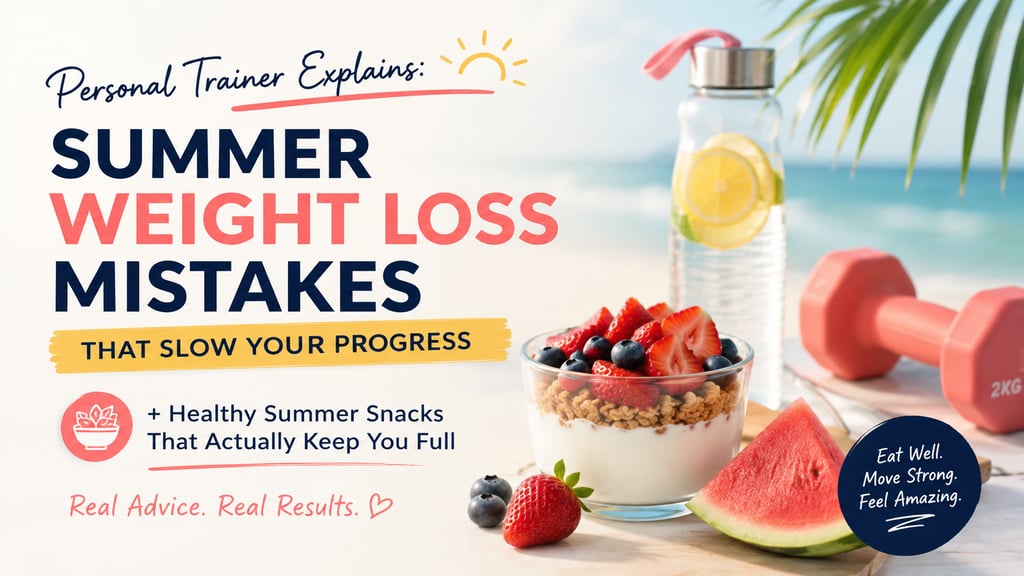
Personal Trainer Explains: Summer Weight Loss Mistakes That Slow Your Progress — Including Healthy Snack Ideas
Discover the common summer weight loss mistakes that can hinder your progress and learn about healthy snacks that keep you full. Get expert advice from a personal trainer to help you achieve your weight loss goals this summer.
Harmony Fitness
5/16/20265 min read
Summer often motivates people to become healthier, move more, and feel more confident in their bodies. But every year, many people make the same mistakes: eating too little, overdoing cardio, skipping meals, or relying on “summer detoxes” that leave them exhausted and frustrated.
The truth is, sustainable summer weight loss is not about extreme diets or punishing workouts. Research consistently shows that long-term results come from balanced nutrition, strength training, daily movement, hydration, and realistic habits.
Here’s what actually works and what may be slowing your progress.
Summer Weight Loss Mistake #1: Eating Too Little
One of the biggest mistakes during summer is dramatically cutting calories to lose weight quickly.
While this may initially reduce body weight, very restrictive diets often:
Increase fatigue
Slow metabolism
Reduce muscle mass
Increase cravings and overeating later
Make workouts feel harder
Studies show that low-calorie dieting combined with inadequate protein intake can reduce lean muscle mass, which lowers resting metabolic rate over time.
Many women also notice:
More bloating
Increased stress eating
Low energy
Poor recovery after exercise
Instead of extreme restriction, focus on:
Balanced meals
Adequate protein
Fiber-rich foods
Consistent eating patterns
Healthy fat loss should support your energy — not drain it.


Summer Weight Loss Mistake #2: Choosing “Healthy” Snacks That Don’t Keep You Full
Many summer snacks are marketed as healthy but digest very quickly and leave you hungry again soon after.
Examples include:
Fruit juice
Granola bars high in sugar
Rice cakes alone
Low-protein smoothies
Sweetened yogurt
The key to satiety is combining:
Protein
Fiber
Healthy fats
These nutrients help stabilize blood sugar and reduce cravings.


Healthy Summer Snacks That Actually Keep You Full
Greek Yogurt Bowl
Greek yogurt with berries, chia seeds, and cinnamon provides protein, fiber, and antioxidants.
Apple + Nuts
Apples combined with almonds or walnuts slow digestion and help maintain energy.
Cottage Cheese & Fruit
High in protein and calcium, especially helpful after workouts.
Hummus & Vegetables
Fiber + healthy fat combination supports satiety and digestion.
Protein Smoothie
Blend milk, cacao powder or protein powder, banana, and ice for recovery and fullness.


My Favorite Pre-Workout Snack
Choosing the right pre-workout snack can improve energy, performance, and focus during training, especially in summer when energy levels can feel lower due to heat and dehydration.
I personally prefer lighter, balanced meals that provide carbohydrates for energy, plus some protein and healthy fats to keep me satisfied without feeling too full during exercise.
If I Train in the Morning
One of my favorite options is a simple, balanced sandwich:
Whole grain bread
Egg
Spinach
Hellim cheese or canned beef (boli beef of Cyprus :D)
Or a bread with smashed avocado with lemon and a little olive oil
This combination provides:
Protein for muscle support
Healthy fats for satiety
Carbohydrates for energy
Fiber and micronutrients from greens and avocado
It keeps me full, energized, and stable during workouts without feeling heavy.
If I Train Later in the Day
I usually prefer something lighter and quicker to digest, such as:
1 fruit (banana, apple, berries, etc.)
Peanut butter or a small handful of nuts
Fruit provides fast, natural carbohydrates for energy, while peanut butter adds healthy fats and helps prevent energy crashes.
Post-Workout Recovery Matters More Than Most People Think
After exercise, your muscles need nutrients for recovery.
A simple recovery snack can help:
Reduce muscle breakdown
Improve recovery
Support muscle growth
Maintain metabolism
One of my favorite post-workout options:
Milk + cacao powder
orMilk + protein powder
Chocolate milk has even been studied as an effective recovery drink because it naturally contains carbohydrates and protein.
Other great post-workout foods:
If I have more time before training, I also enjoy preparing:
Oats
1 fruit (berries, banana, peach etc.)
Chia seeds
Milk or yogurt
Mixed together and prepared ahead of time.
This is a great option because it combines:
Slow-release carbohydrates
Fiber
Protein
Healthy fats
Which can help support longer workouts and stable energy levels.
Other options can be:
Eggs + toast
Protein smoothie
Tuna sandwich on whole grain bread
Avoid Very Heavy Meals Before Training
Very fatty, greasy, or overly large meals before workouts may:
Cause bloating
Reduce performance
Make exercise feel uncomfortable
The goal of a pre-workout snack is to feel energized — not overly full.
Everyone digests foods differently, so finding what works best for your body is important.


Summer Mistake #3: Doing Too Much Cardio and Avoiding Strength Training
Many people spend summer doing endless cardio while avoiding resistance training because they fear becoming “bulky.”
But research shows strength training:
Helps preserve lean muscle mass
Improves metabolism
Reduces abdominal fat
Supports hormone health
Improves insulin sensitivity
Muscle tissue burns more energy than fat tissue, even at rest.
Strength training also shapes the body and improves posture, confidence, and long-term health.
This is especially important for women, since muscle mass naturally decreases with age.
Even 2–3 sessions per week can create significant changes.
With only 2–3 personal training sessions weekly combined with sustainable habits.
Need More Personalised Support?
Every body is different. Hormones, lifestyle, stress, sleep, nutrition, and training history all affect results, which is why generic plans don’t work for everyone.
If you feel confused about:
What to eat before or after workouts
How to lose fat without extreme dieting
Building strength safely
Improving energy and consistency
Creating a realistic routine that fits your lifestyle
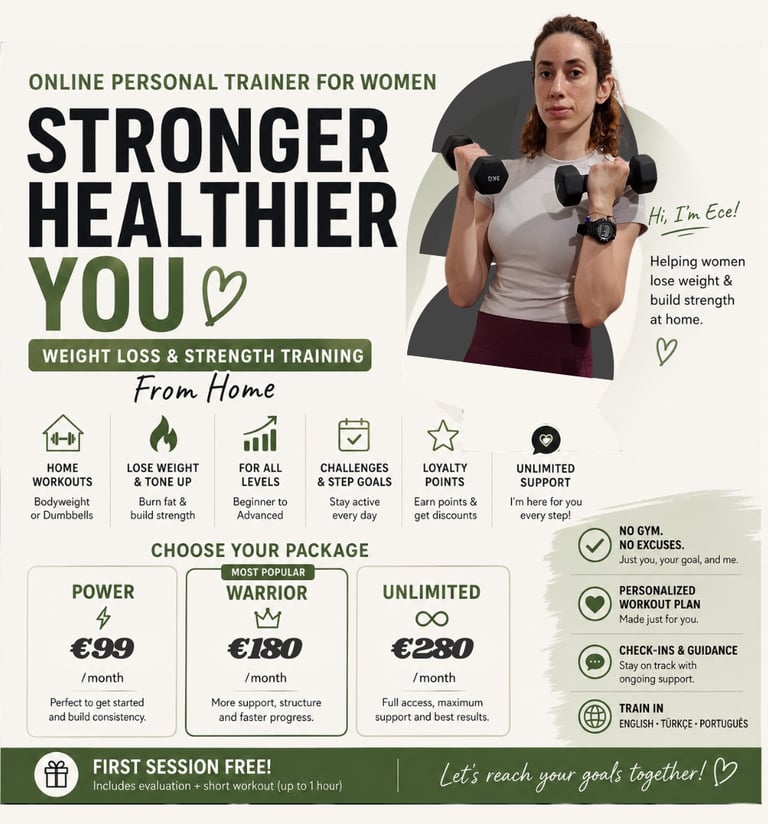
I can help guide you with personalised support, training, and nutrition advice tailored to your goals and fitness level.
My coaching focuses on:
Sustainable fat loss
Strength training for long-term health
Low-impact and beginner-friendly options
Building healthy habits without restriction
Feeling stronger, healthier, and more confident
Online personal training can help you stay accountable and progress safely with professional guidance.
📩 Feel free to contact me for 1-on-1 coaching, online personal training, or personalised fitness support.
Hydration Affects Fat Loss Too
Hot weather increases fluid loss through sweat.
Even mild dehydration can affect:
Energy
Exercise performance
Hunger signals
Recovery
Sometimes what feels like hunger is actually dehydration.
Tips:
Drink water consistently throughout the day
Include fruits with high water content (watermelon, cucumber, berries)
Increase fluids during workouts and hot days
What Healthy Eating Actually Means
Healthy eating does NOT mean:
Cutting all carbs
Avoiding social events
Eating salads only
Following extreme detoxes
Healthy eating means:
Eating mostly whole foods
Prioritizing protein and fiber
Having balanced meals
Enjoying treats in moderation
Building habits you can maintain long term
The goal is not perfection. The goal is consistency.
Final Thoughts From a Personal Trainer
Summer results do not come from starving yourself or punishing workouts.
The most effective approach combines:
Strength training
Daily movement
Balanced nutrition
Proper recovery
Realistic habits
Your body responds best when it feels supported, nourished, and challenged appropriately.
If you want support building healthier habits, improving strength, and feeling more confident this summer, our personal training sessions are designed to help you progress safely and sustainably.
Online Personal Trainer for Women
References
Boutcher, S. H. (2011). High-intensity intermittent exercise and fat loss. Journal of Obesity, 2011, 868305. https://doi.org/10.1155/2011/868305
Leidy, H. J., Clifton, P. M., Astrup, A., et al. (2015). The role of protein in weight loss and maintenance. American Journal of Clinical Nutrition, 101(6), 1320S–1329S.
Paddon‐Jones, D., & Rasmussen, B. B. (2009). Dietary protein recommendations and the prevention of sarcopenia. Current Opinion in Clinical Nutrition and Metabolic Care, 12(1), 86–90.
Slentz, C. A., Duscha, B. D., Johnson, J. L., et al. (2004). Effects of the amount of exercise on body weight and body composition. Archives of Internal Medicine, 164(1), 31–39.
Thomas, D. T., Erdman, K. A., & Burke, L. M. (2016). Position of the Academy of Nutrition and Dietetics: Nutrition and athletic performance. Journal of the Academy of Nutrition and Dietetics, 116(3), 501–528.
Willis, L. H., Slentz, C. A., Bateman, L. A., et al. (2012). Effects of aerobic and/or resistance training on body mass and fat mass. Journal of Applied Physiology, 113(12), 1831–1837.
Harmony Fitness
Online Personal training for women who want to transform their health and build lasting fitness habits.
Connect With Me
Get notified about news! No spam, just motivation!